The Refrigeration Cycle
How air conditioners move heat outside. Air conditioners do not make cold. They move heat from inside to outside using a refrigerant, a compressor, two coils and an expansion device. Here is how.
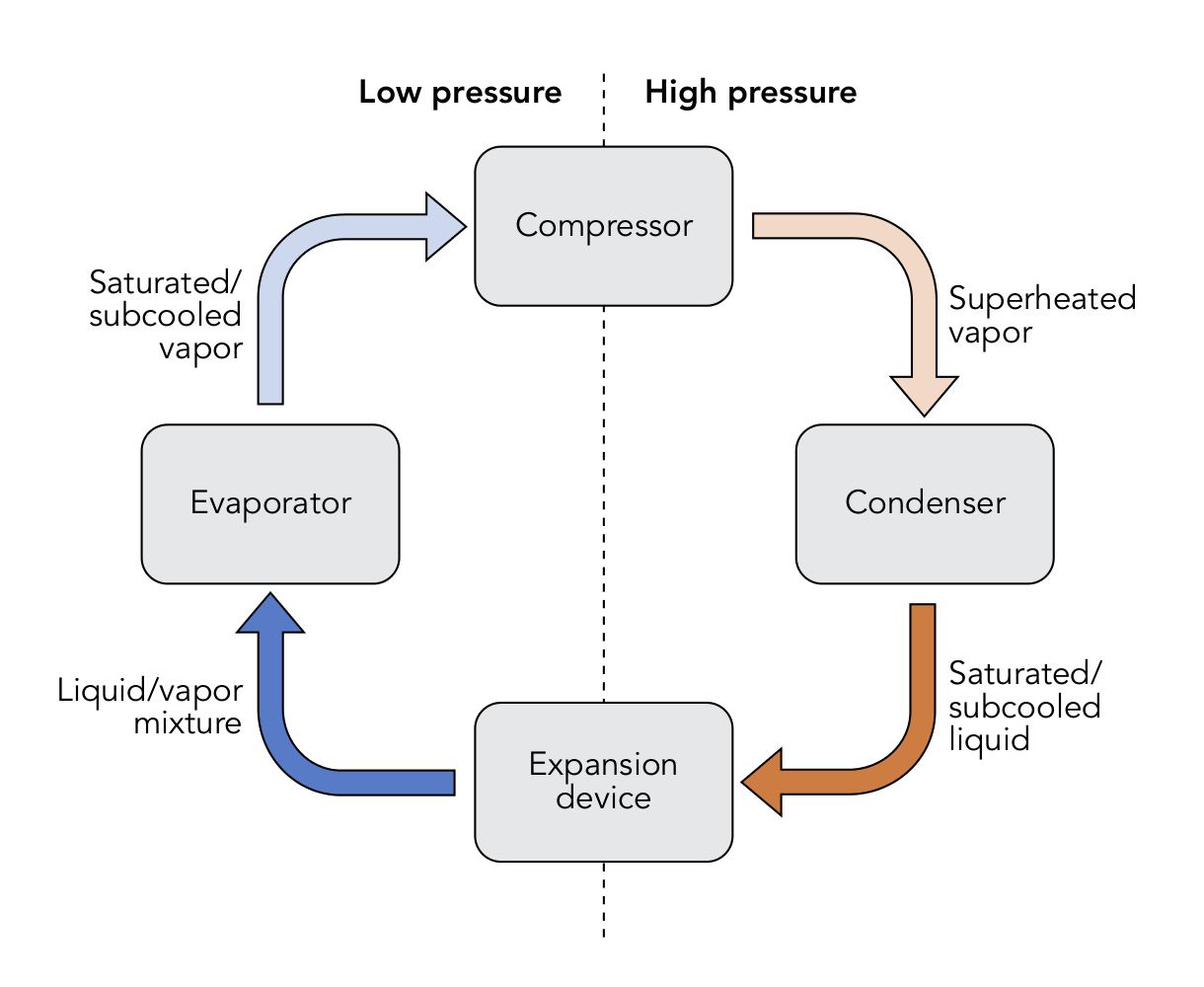
The vapor compression cycle: WGisol, CC BY-SA 4.0
Moving heat, not making cold
An air conditioner works like a heat pump pointed one way. It collects heat from the air inside your home and carries it outdoors. The carrier is a refrigerant, a fluid chosen because it boils at a very low temperature and can be squeezed back into a liquid with a compressor.
When a liquid evaporates it soaks up heat, which is why wet skin feels cool in a breeze. An air conditioner uses that same physics in a sealed loop that runs over and over.
Four steps around the loop
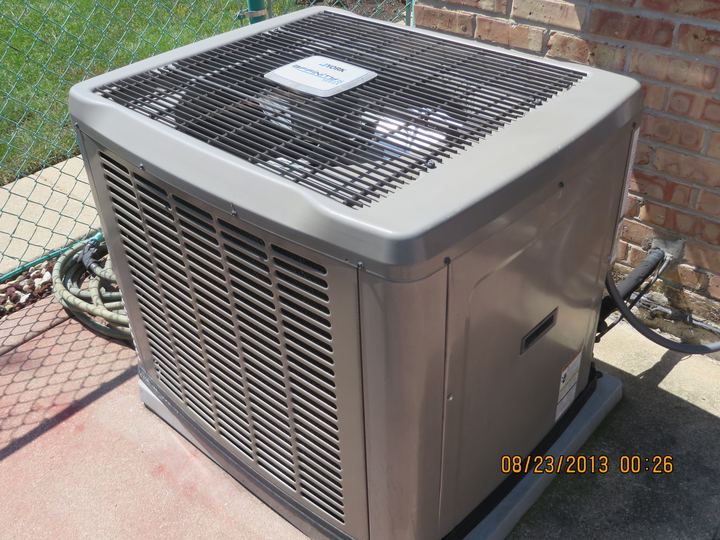
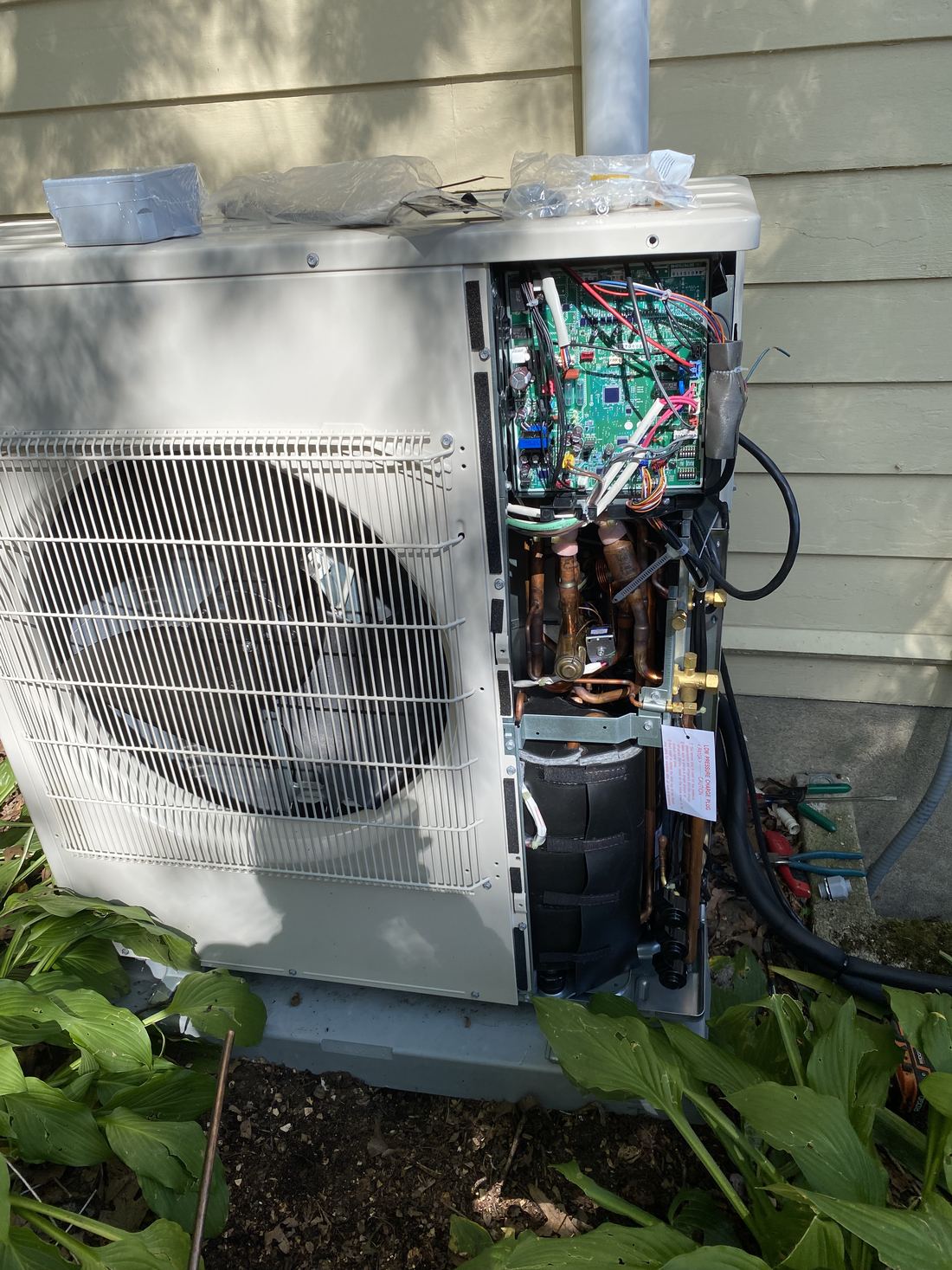
First, the compressor squeezes refrigerant vapor, making it hot and high pressure. Second, it flows to the outdoor coil, the condenser, where the fan blows outdoor air across it and the refrigerant gives up heat and turns into a liquid.
Third, the liquid passes through an expansion device, a small valve or restriction that drops its pressure and temperature sharply. Fourth, the cold refrigerant enters the indoor coil, the evaporator. Warm house air blown across the coil gives up its heat, the refrigerant boils back into vapor and returns to the compressor to start again.
Why the coil drips
The indoor coil is colder than the dew point of most indoor air, so water vapor condenses on its fins just like on a cold glass. That water runs into a drain pan and out through a condensate line. This is why air conditioning also lowers humidity, and why a clogged drain line can cause leaks.
A coil coated in dust cannot swap heat as well. Clean filters protect the coil, which is one reason filter changes matter for efficiency.
The same idea everywhere
Your refrigerator, a chest freezer and a heat pump all use this vapor compression cycle. A heat pump simply adds a reversing valve so it can run the loop backwards in winter and bring heat inside.
The cycle is old, but refrigerants have changed many times as scientists learned about ozone damage and climate effects. Today's new US systems use lower global warming potential refrigerants than those sold a few years ago.
Signs the cycle is struggling
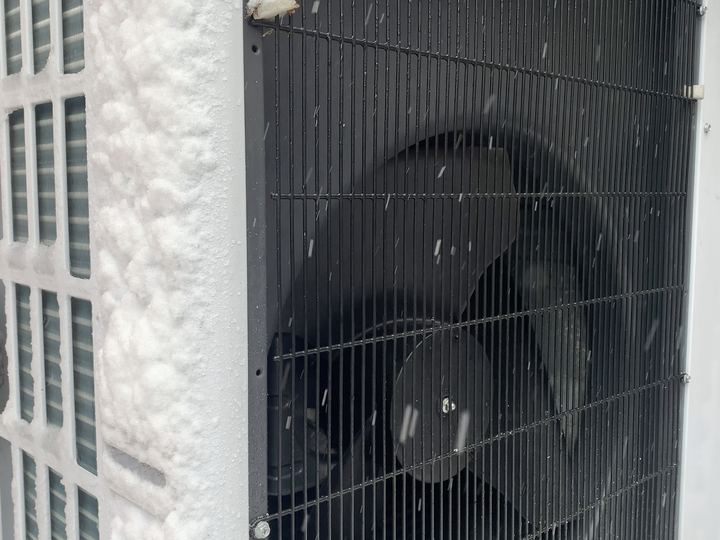
When something in the loop is off, the symptoms are often visible. Ice on the indoor coil or the larger copper line can mean low airflow from a dirty filter or a low refrigerant charge. An outdoor unit whose fan runs but blows only mildly warm air may not be moving much heat.
Refrigerant does not get used up like fuel. If a system needs more, it has a leak. Finding and repairing leaks, and handling refrigerant at all, is work for certified technicians with the right gauges and recovery equipment.
Facts on this page were checked against these sources.
- The vapor compression cycle: WGisol, CC BY-SA 4.0
- Inside an outdoor unit: ArnoldReinhold, CC BY-SA 4.0
Text written by Clear Air Cleaning.